


The ways that the juvenile Egyptian vultures chose during their migration
12.09.2013- Home
- Useful information
- The ways that the juvenile Egyptian vultures chose during their migration
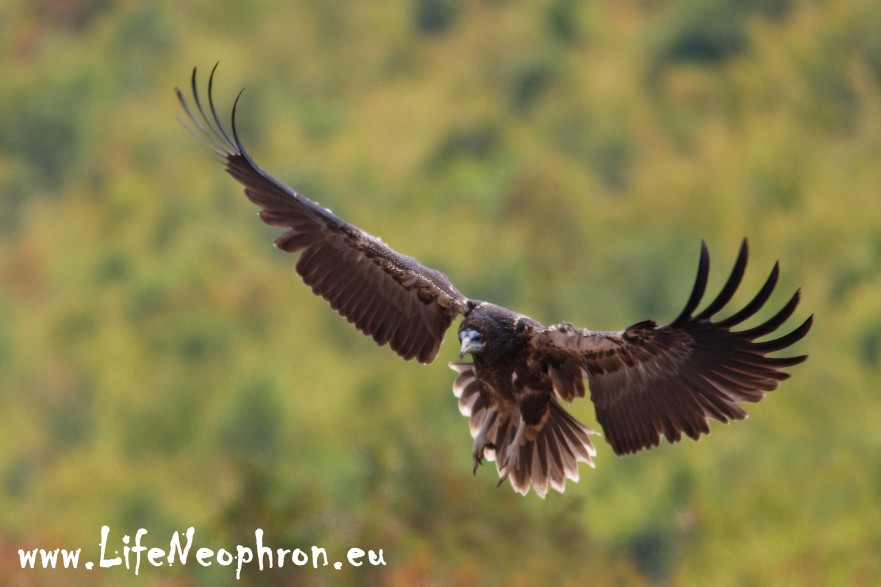
10 juvenile Egyptian vultures from the Balkans were equipped with satellite transmitters within the project LIFE + "The Return of the Neophron" this year. Three of them are in Bulgaria, 4 in Greece, 2 in Macedonia and 1 in Albania. So far the birds from Macedonia and Albania have not started migration and still stand near their nests.
Sanie, one of the three Bulgarian juveniles, was spotted flying near Madjarovo and still stick to the area around the nest.
The other 2 birds - Asparukh and Ibrahim set off to Africa about a week ago. Currently Ibrahim is located on the island of Amorgos in the Aegean Sea and traveled to the southwest, which could have end in a tragic way if he tries to fly over the Mediterranean Sea.
Most interesting is the fate of Asparukh who took to the southwest of Africa and is now attempting to cross the Mediterranean. The last point of Asparukh is from the middle of the sea where the birds` course coincides with the direction of the freighter JRS MIRA which will dock in Alexandria. The possibility that he has fallen exhausted on the ship is increasing, as the last two days transmitter transmits from nearby points in the sea. We can only wait to see what will be the fate of Asparouh.
One of the two Greek birds has not yet begun migration and is located near the nest. The second bird in the same nest is now on the island of Chios in the Aegean Sea and hesitates where to go. We hope that it will not attempt to fly over the sea.
Unfortunately the two juveniles from Meteora tried to cross the Mediterranean. The last point of the one bird is from the sea south of the Peloponnese, and the last point of the second bird from a few days ago in the middle of the Mediterranean Sea, south of Crete. We expect new data from the transmitter to see what will be the fate of the misguided in the sea birds.
Very often young birds lose the right path during migration because they are inexperienced and usually follow the adult birds. Since Egyptian Vultures in the Balkans are about 80 couples, adult birds that lead the juveniles are becoming less and less, perhaps this is one of the reasons so many young birds to confuse the right path.
You can watch the migration of the juvenile Egyptian Vultures very soon on our web site.
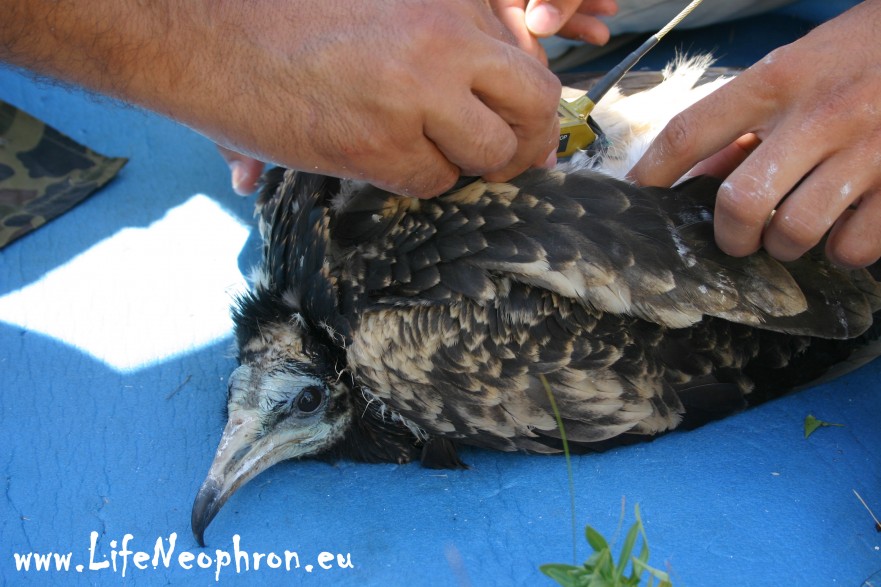

The breeding performance of the Egyptian Vulture population in Bulgaria is among the highest in Europe


 iordanka.goranova@bspb.org
 +359 (02) 979 95 00


