


Meteora´s juveniles satellite tagged for second year
11.08.2013- Home
- Useful information
- Meteora´s juveniles satellite tagged for second year
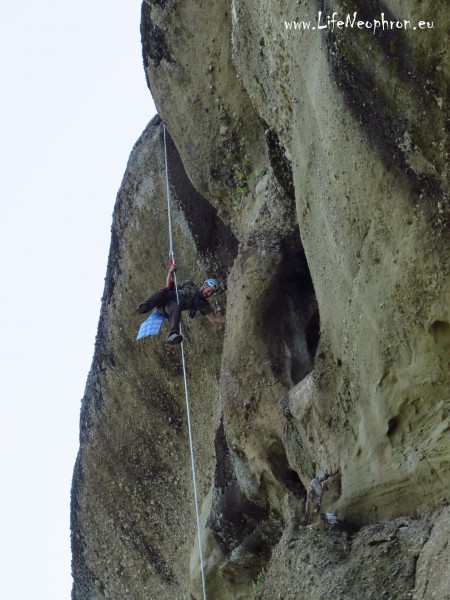
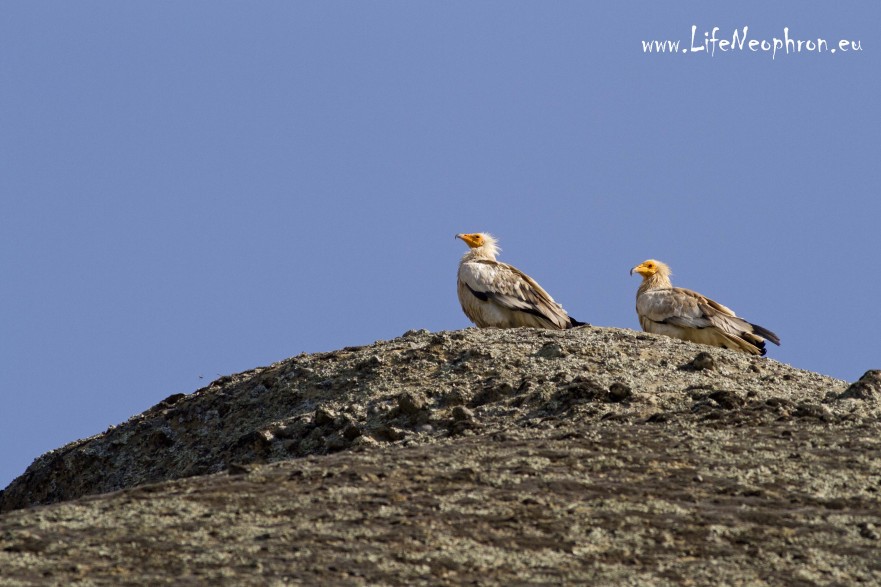
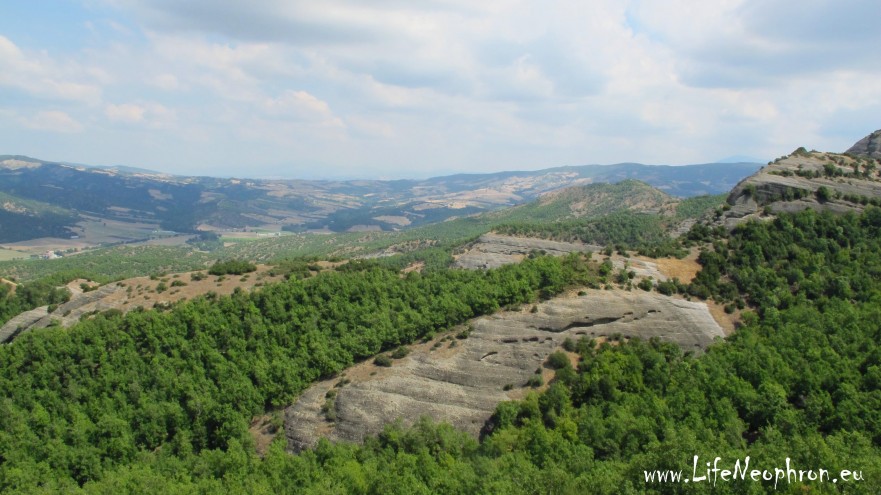
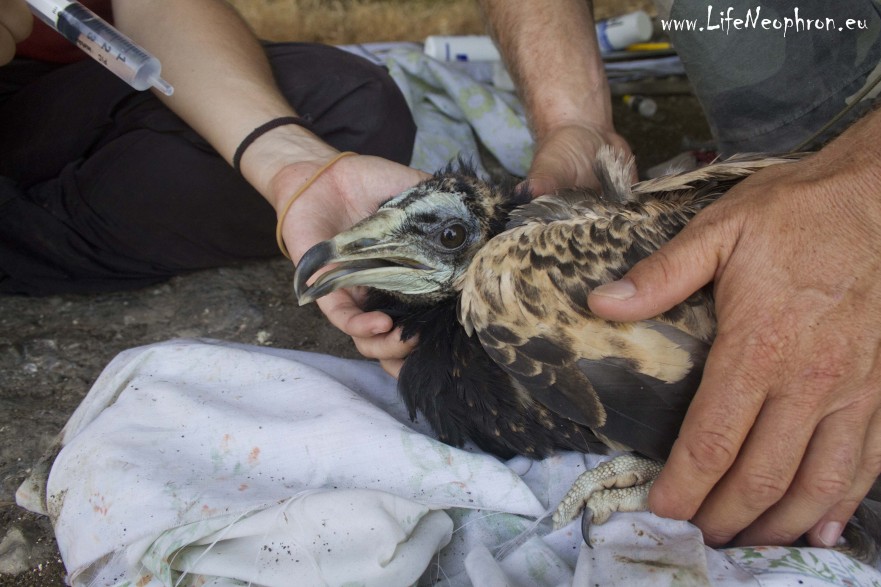
Carrying on with the work started in 2012, during the last week, HOS field team fitted two GPS satellite transmitters on two Egyptian vulture fledglings in the area of Meteora-Antichasia. One of the birds tagged belonged to the same nest as Ikaros, the first juvenile tagged in Greece last year. These transmitters will provide us with important information such as if Ikaros´ sibling will follow the same route as Ikaros did or if it will find a safer one in order to reach its wintering grounds (Ikaros drowned while trying to cross the Mediterranean).
Both birds have already been "baptized" by their respective nest wardens who have been following their every move since they hatched from their eggs. Ikaros sibling will be called Berenice after the asterism Coma Berenice, while the second juvenile will be called Heracles after the Greek divine hero. Nest guarding is one of project's key actions and has proved most successful when combined with the supplementary feeding of selected nests in order to reduce risk of death through poison baits.
We would like to take the chance to thank the climbers Giannis and Thanos for their invaluable help to access both nests.

The breeding performance of the Egyptian Vulture population in Bulgaria is among the highest in Europe


 iordanka.goranova@bspb.org
 +359 (02) 979 95 00


